Running a Standard kit for a month adds about 43 kilowatt-hours to your electricity bill. At the US average of roughly 17 cents a kilowatt-hour, that is around $7 — call it $9 once the router is included.
That number is boring, and it is also the reason most articles about Starlink power are boring. Electricity is the cheapest part of owning a dish. The number that changes decisions is the same 43 kWh priced against a battery: about 1,400 watt-hours a day, which is most of a mid-size power station, every day, for as long as you are off-grid.
So the useful question is not how many watts Starlink uses. It is which of the numbers below applies to you — and where people usually get it wrong.
What it draws, and what that costs
| Kit | Draw | Per month | Cost at $0.17/kWh |
|---|---|---|---|
| Standard (Gen 3) | 50–75 W | 36–54 kWh | $6–9 |
| Mini | 25–40 W | 18–29 kWh | $3–5 |
| Router | 10–15 W | 7–11 kWh | $1–2 |
| Full Standard kit | 60–90 W | 43–65 kWh | $7–11 |
Two things follow from that table. On grid power, Starlink costs less to run than a fridge. The moment you are not on grid power, the same wattage becomes a hardware problem measured in dollars per watt-hour, and that cost curve looks nothing like an electricity bill.
Five things people get wrong
The dish is a phased-array radio with a computer attached, re-pointing at a new satellite every few minutes. The average sits in the published range, but the draw moves constantly — and one feature moves it further than anything else.
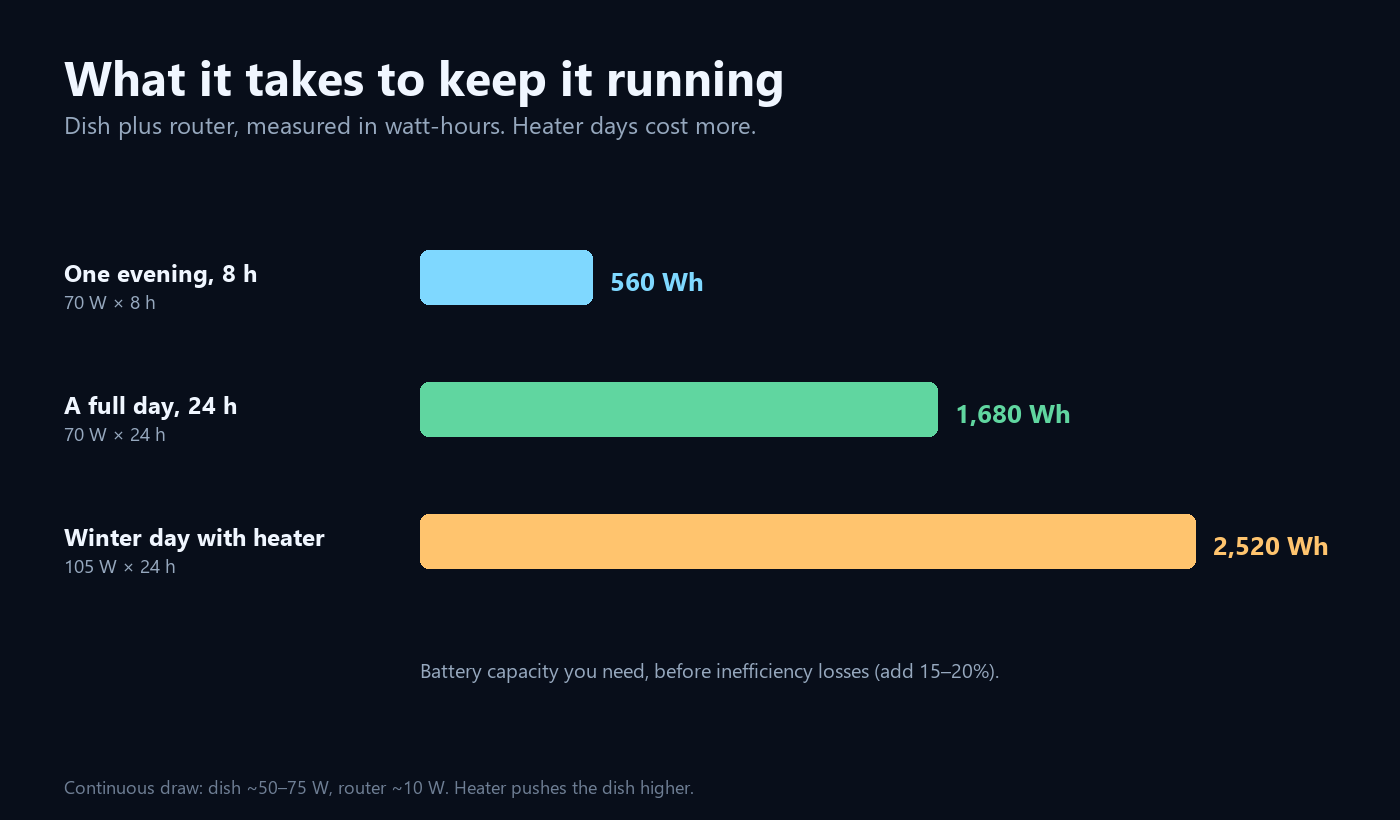
This is the one that breaks battery plans. The dish heats its own face to keep ice off, which can push a Standard kit past 100 W for as long as the weather lasts. Size a battery on 70 W and a February storm will find the gap.
Capacity is not the only variable. A large station that burns 15 W of its own overhead eats the margin you paid for, and the built-in inverter is less efficient at the dish’s modest load than its headline suggests. A 1,000 Wh station does not deliver 1,000 Wh to a dish.
True on watts, trivial on cash. Switching from a Standard kit to a Mini saves roughly $3 to $5 a month on grid power. As an off-grid decision it saves much more, because it halves the battery you need — the savings are in the hardware, not the bill.
For two separate reasons that get conflated. The heater raises consumption, and the cold reduces what your battery can deliver. A pack rated at 500 Wh gives you less usable energy at -10 °C than at room temperature, so winter hits from both ends at once.
The numbers for one night off-grid
Take the most common case: a Standard kit running from 6 p.m. to 8 a.m. Fourteen hours at 70 W is 980 watt-hours. Add 15 to 20 percent for inverter and battery losses and you need about 1,150 Wh of usable capacity to wake up with the dish still online.
In a van or a boat the same figure is usually quoted in amp-hours, because that is how batteries are sold. Seventy watts at 12 V is about 5.8 A, so fourteen hours is roughly 81 Ah. A 100 Ah lithium pack covers it with a little margin and nothing else on the boat. A lead-acid bank with the same label does not, because only about half of it is usable without shortening its life.
One comparison worth making before you buy anything: a small inverter generator produces a kilowatt-hour for roughly a dollar in fuel at current US prices, and it does not care about cloud cover. It is loud, it needs oil changes, and it is the reason plenty of off-grid builds pair a modest battery with a generator instead of buying a very large battery and another row of panels.
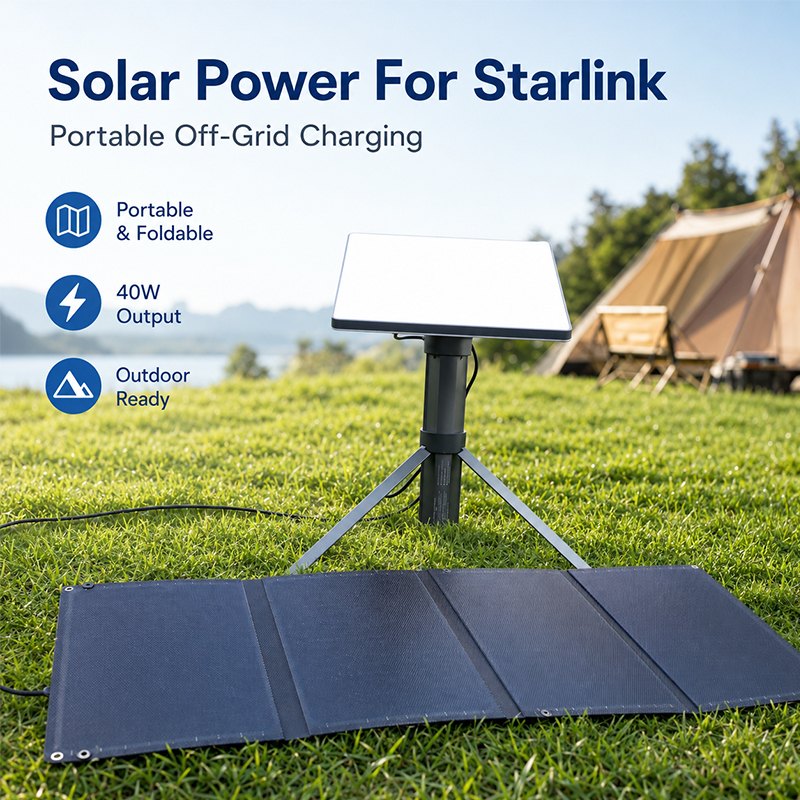
If you are recharging from panels, size the array from the overnight figure, not the daily average. Needing 1,150 Wh back with four usable sun hours means roughly 300 W of panels to break even, and more to recover after a cloudy day. This is where most off-grid builds come up short, because panels are priced per watt and starting small feels prudent until the third overcast day.
Where the install fails
The dish is weatherproof. The power supply that feeds it is not, and that asymmetry accounts for a large share of the “my Starlink died after a storm” reports. The fix is unglamorous: keep the brick under cover, off the ground, with a drip loop in the cable so water runs away from the connector instead of into it.
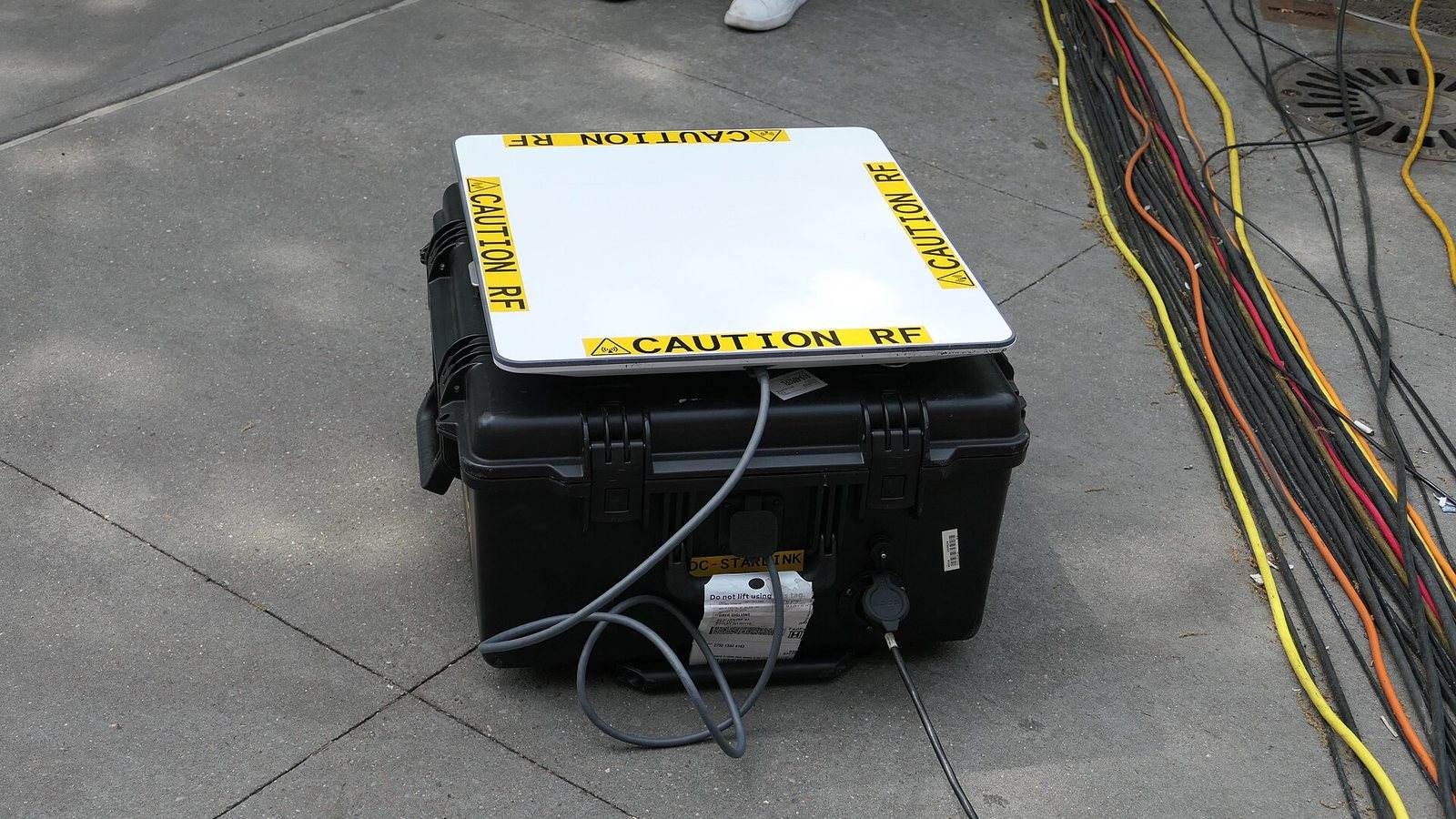
Voltage drop is the other quiet failure. A long run at 12 V loses a meaningful share of its power in the wire itself, which shows up as a dish that browns out during a cold snap rather than as an obvious fault. Shortening the run or moving up a wire gauge fixes it. Buying a bigger battery does not.
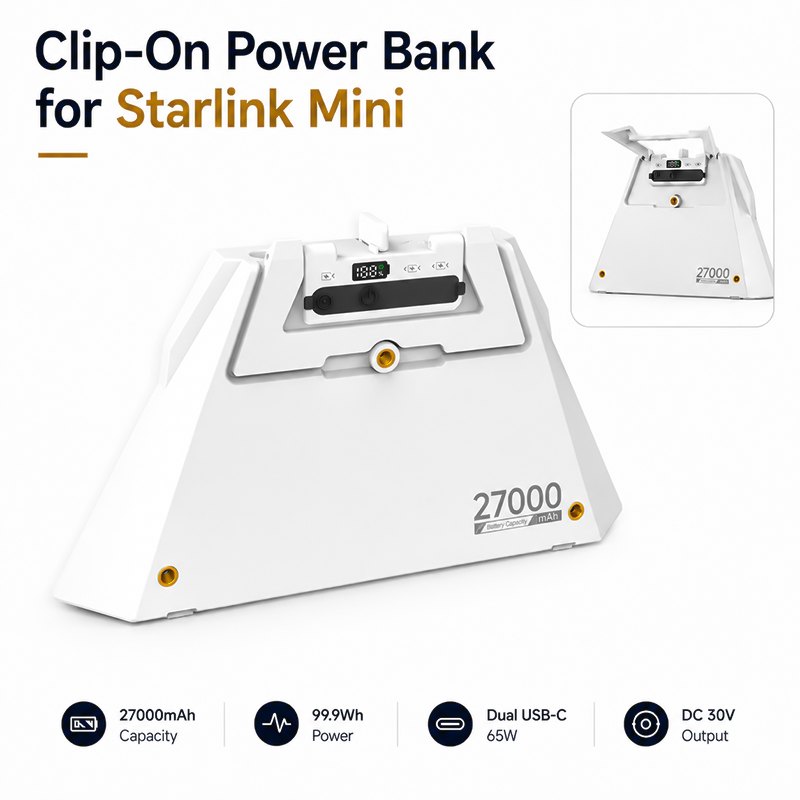
If you would rather not build an enclosure, a supply that clamps to the same stand as the dish removes a separate box from the list. The PB99 back-clamp power supply is one of ours — made by Fusynthx, which is our own brand, and compatible with Starlink rather than licensed by them. We do not sell it on this site; the reason to mention it is that sharing one bracket is worth more than it sounds when the alternative is a plastic bag over a power brick.
Measure yours tonight
Every figure above is a range, and your install is a specific case with its own firmware, climate and cable length. A plug-in watt meter settles it for about the price of a takeaway meal.
- Put the meter between the wall and the supply and leave it for 24 hours on a normal day.
- Write down the peak, not just the total. The peak tells you the smallest inverter or station you can safely use.
- Repeat it once on a cold night with snow melt running. That number replaces every estimate in this article.
Do this today: before buying a battery or a station, spend one evening measuring. It converts a range from a blog post into a fact about your own roof — and it is the difference between a build that survives February and one that does not.
If you are still deciding whether the service itself is worth it at your address, start with the full guide for buyers and current owners. If you already know you are going off-grid, the start here page lays out the order: sky view first, then power, then cable.